Blog
Descubre nuestros últimos artículos sobre IA, productividad y mejores prácticas para tus reuniones.

La IA de reuniones se está convirtiendo en una capa de coaching para managers
Meeting AI is moving beyond recall and follow-up into a new use case: helping managers coach better by surfacing recurring patterns across one-on-ones, team syncs, and project reviews. The real shift is not automated advice for its own sake, but faster visibility into where expectations, blockers, and performance themes keep repeating. For businesses, that turns meeting memory into a practical coaching input instead of a passive archive.

Los equipos ahora usan la IA de reuniones para acortar la rampa de nuevos empleados
Teams are starting to use meeting AI as an onboarding layer, not just a notes layer. Instead of asking new hires to piece together context from scattered docs and secondhand recaps, companies can use searchable transcripts, summaries, and action history to compress the time it takes to understand customers, internal decisions, and ongoing work. This matters because ramp speed is becoming a revenue and execution issue, especially in remote and hybrid teams where context loss compounds quickly.

Los managers ahora esperan que la IA de reuniones responda preguntas
In 2026, basic meeting summaries are no longer enough to stand out. The emerging expectation is that meeting AI should answer specific follow-up questions across prior conversations, helping managers recover context, confirm decisions, and find ownership without digging through transcripts. This shift matters because the real bottleneck is not capturing meetings anymore—it is retrieving the right answer fast enough to keep execution moving.

La IA de reuniones se está convirtiendo en la capa de preparación
A new expectation is emerging in meeting AI: teams do not just want a recap after the call, they want a usable brief before the next one. The winning products are turning transcripts, decisions, and action history into prep-ready context that helps sellers, managers, and operators walk into meetings already aligned. For Upmeet.ai, this creates a sharper positioning opportunity around searchable continuity, not generic note-taking.

La IA para reuniones empieza a detectar la deriva de decisiones
Meeting AI is moving beyond summarization into a new accountability use case: spotting when teams slowly drift away from what they actually agreed in prior meetings. As businesses run more recurring syncs, leadership reviews, and cross-functional handoffs, the real value is no longer just documenting decisions but detecting when execution starts to diverge from them. For SMB and mid-market teams, this turns meeting memory into an operational early-warning system.

Por qué la memoria de reuniones lista para auditoría está ganando fuerza
As AI meeting assistants mature, buyers are starting to evaluate them less like note-taking utilities and more like systems of record. The new pressure point is audit-ready meeting memory: searchable transcripts, decision trails, action ownership, and retrieval controls that help companies prove what was discussed, what was agreed, and what happened next. For SMBs and mid-market teams, this trend matters because execution risk increasingly comes from lost meeting context, not just bad summaries.

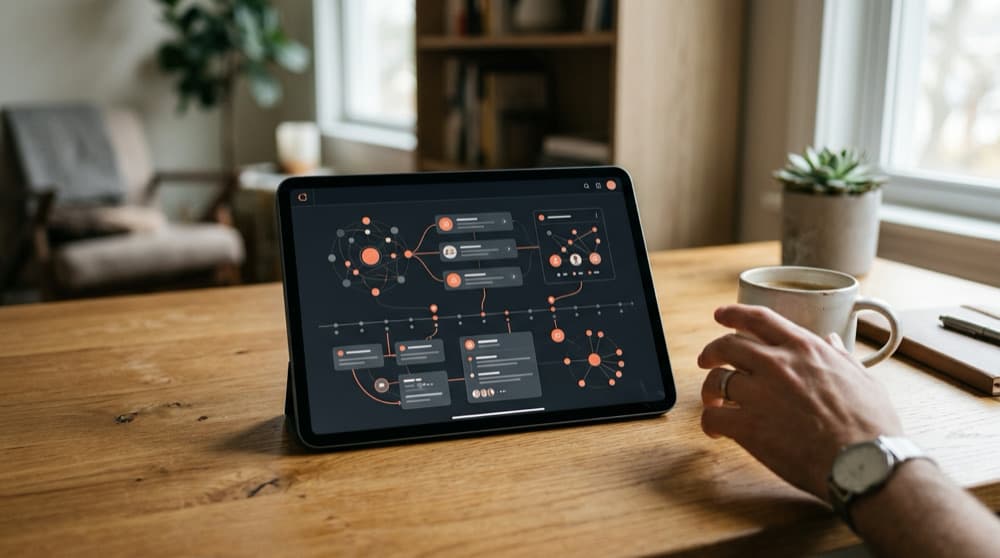
La memoria de reuniones con IA se convierte en infraestructura operativa
Meeting AI is shifting from a note-taking convenience to an operational system teams rely on after the call ends. The real value now is not just capturing what was said, but turning meeting context into searchable, reusable institutional memory that improves execution, onboarding, and decision speed. For SMB and mid-market teams, that makes meeting memory a workflow asset rather than a passive archive.

Las herramientas de IA para reuniones deben generar decisiones, no solo resúmenes
The market is moving past AI meeting assistants that merely produce transcripts and generic summaries. Buyers increasingly want systems that turn meetings into accountable decisions, assigned next steps, and retrievable organizational memory. This angle positions Upmeet.ai around the real commercial outcome teams care about: better execution after the meeting, not prettier notes.

Claude Cowork Needs Upmeet for Meeting Follow-Through
As AI teammates like Claude become more embedded in day-to-day work, teams are starting to realize that coworking with an AI is not the same thing as preserving meeting reality. Claude can help people think, draft, and analyze, but it does not automatically become the source of truth for what was said, decided, assigned, and promised in live meetings. That is where Upmeet becomes the operational complement: it captures meeting memory, structures follow-ups, and makes post-meeting execution searchable and accountable.

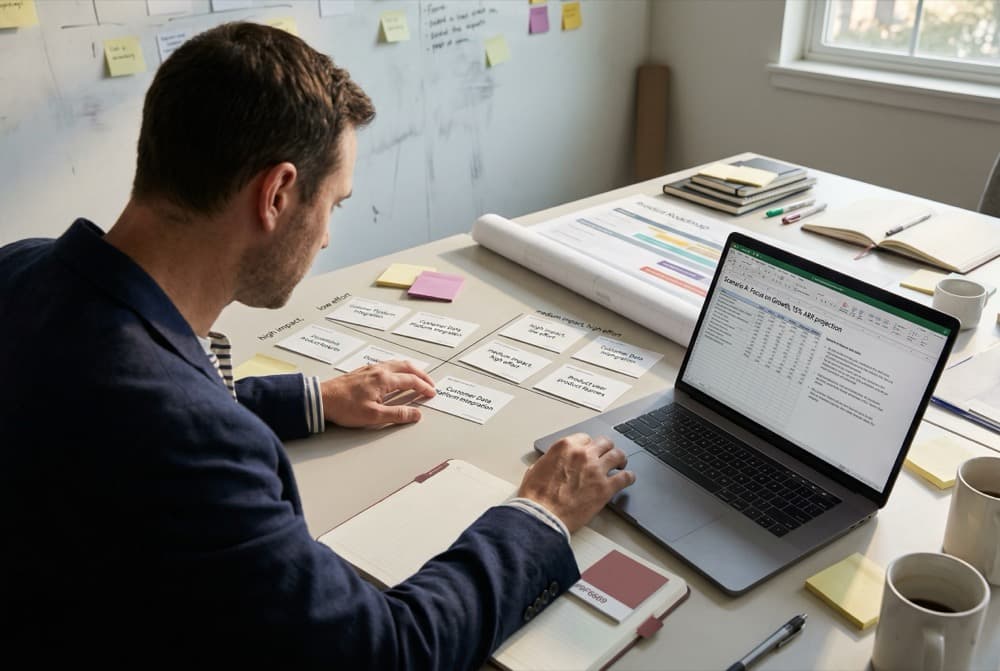
Cómo los product owners usan la IA para poner a prueba la estrategia
Product owners are moving beyond using AI for backlog grooming or writing tickets. The sharper opportunity is to use AI as a decision-support layer that helps challenge assumptions, simulate trade-offs, and make strategic choices with more rigor before teams commit roadmap capacity. This angle is timely because product teams are under pressure to ship faster while proving why each priority deserves investment.

La IA de reuniones se está convirtiendo en el disparador del workflow
The market is moving beyond AI meeting tools that simply record, transcribe, and summarize conversations. The next competitive battleground is whether meeting AI can reliably trigger the right next actions across the business: assigning owners, surfacing follow-ups, and turning discussion into execution without manual cleanup. For SMB and mid-market teams, that shift matters because the biggest cost of meetings is rarely the conversation itself—it is the lag between agreement and action.

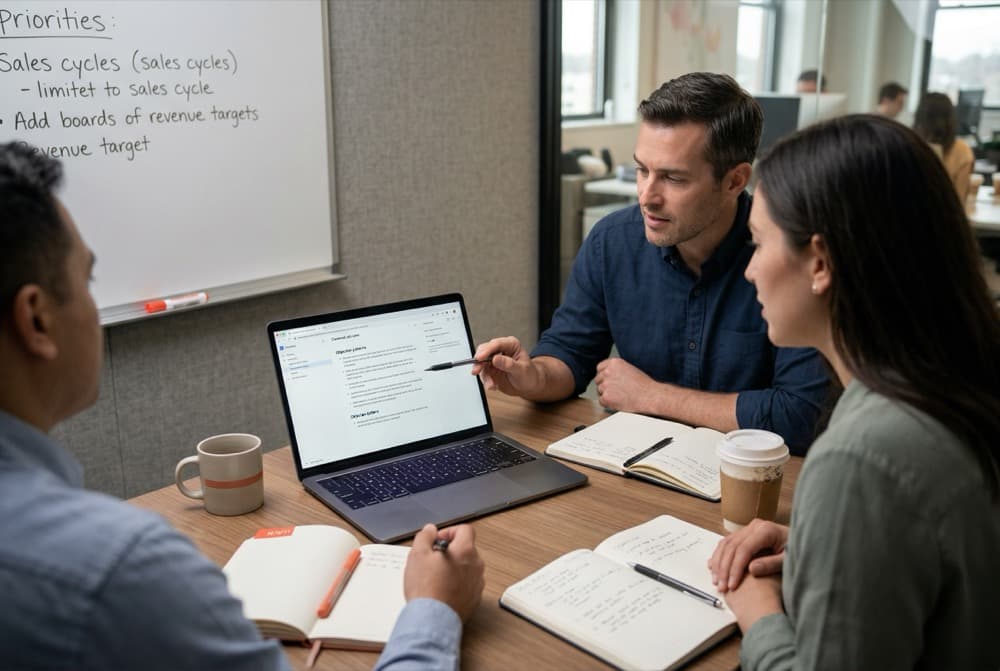
La IA de reuniones pasa de las notas a la inteligencia de pipeline
AI meeting assistants are moving beyond generic recap output and becoming a source of pipeline intelligence for revenue teams. The real shift is not better notes — it is the ability to capture objections, buying signals, next steps, and execution risk directly from customer conversations. For companies trying to protect win rates and improve follow-through, meeting memory is starting to look like a revenue operating layer.

Meeting Search se está convirtiendo en el nuevo motor de VOC
Quarterly VOC decks are too slow for teams shipping every week. In 2026, revenue, product, and customer teams are starting to treat searchable meeting memory as a live voice-of-customer system that captures objections, feature friction, and buying language directly from real conversations. The shift matters because it turns scattered call notes into evidence that can shape messaging, roadmap priorities, and enablement faster.

La búsqueda en reuniones reemplaza las suposiciones en escalaciones
As service and customer-facing teams juggle more accounts, escalations increasingly fail because key context is scattered across calls, internal syncs, and handoff notes. Searchable meeting memory is emerging as the fastest way to reconstruct what was promised, what changed, and what the customer actually cares about before an issue spreads. For SMB and mid-market teams, this is becoming a practical alternative to maintaining perfect documentation.

OpenClaw vs Claude Managed Agents
As managed agent platforms mature, buyers are being forced to choose between two very different operating models: self-hosted control and vendor-managed convenience. Claude Managed Agents reduces infrastructure burden with a cloud-hosted execution layer, while OpenClaw offers stronger flexibility, channel-native orchestration, and deeper ownership over runtime, memory, tools, and data flow. The real strategic question is not which is universally better, but which model fits the company’s risk tolerance, technical maturity, and desired level of control.

Retrieval Accuracy Is the New Meeting AI KPI
Buyers are moving past “nice summary” demos and asking a harder question: can the system retrieve the right decision, owner, and source moment from a messy meeting archive when the stakes are real? In 2026, the quality bar for meeting AI is shifting toward retrieval accuracy, citation quality, and trust under pressure. That makes searchable, source-linked meeting memory a more strategic product promise than transcription alone.

La puesta al día consultable está reemplazando los resúmenes del lunes en equipos híbridos
In 2026, hybrid teams are moving away from weekly recap meetings that exist mainly to rebuild context. Instead, they are adopting searchable meeting memory so people can self-serve decisions, action items, and missed discussions without dragging the whole team back into another sync. For operators and managers, the shift matters because it cuts context debt while preserving accountability.

Los briefs con fuentes van a reemplazar los board packs imprecisos
As executive teams adopt agentic workflows in 2026, the weak point is no longer note capture — it is whether leadership briefings can be traced back to what was actually said, decided, and assigned in meetings. This article argues that source-linked executive briefs will overtake static board-pack summaries because they reduce decision risk, improve accountability, and make follow-up faster. For Upmeet.ai, that creates a timely narrative around turning meeting history into credible executive-grade evidence.

De la Charla al Entrenamiento: Las Reuniones como Fábricas de Datos Sintéticos
In 2026, the primary output of a meeting isn't just a summary—it's high-fidelity human-in-the-loop data used to fine-tune specialized team AGIs. This angle explores how Upmeet transforms raw meeting context into structured synthetic datasets, allowing companies to train custom models on their unique institutional logic, edge cases, and cultural nuances without manual data labeling.

Cómo la búsqueda con IA en reuniones detecta antes las objeciones del comprador
B2B revenue teams are sitting on a hidden source of pipeline intelligence: the objections buyers raise in internal debriefs, discovery calls, demos, and renewal reviews. In 2026, the edge is no longer just recording meetings — it is making objection patterns searchable fast enough for sales, product marketing, and leadership to act before deals stall. This article shows why searchable meeting memory is becoming an early-warning system for revenue risk.

Cómo la memoria de reuniones consultable escala equipos de alto crecimiento
In 2026, the competitive edge isn't attending more meetings—it’s never having to attend the same one twice. This piece explores how decentralized teams are using persistent meeting memory to replace status syncs with searchable, actionable intelligence.

La Gran Divergencia: Navegando la Geopolítica de la Estrategia de IA en 2026
Cette analyse explore la divergence stratégique entre l'approche américaine axée sur l'échelle massive, le modèle chinois intégré verticalement et l'accent européen sur l'IA de confiance. Nous examinons comment ces trois blocs redéfinissent la productivité d'entreprise à travers des cadres réglementaires et des infrastructures de calcul radicalement opposés.

Las reuniones son la capa de contexto para los agentes de IA
In 2026, teams are moving from one-off AI prompts to agentic workflows, but many of those agents still fail because they lack business context. The missing layer is not another dashboard; it is the searchable history of meetings where decisions, objections, dependencies, and owner changes are actually discussed. This article argues that meeting intelligence is becoming the operating context that makes AI agents useful, accountable, and commercially relevant.

La Auditoría de "Acción Agente": Por Qué las Reuniones de 2026 Están Abandonando las Transcripciones por Flujos de Trabajo Autónomos
Durante años, el "asistente de reuniones de IA" se definió por su capacidad de escuchar. En 2024 y 2025, el éxito empresarial se medía por la precisión de una transcripción o la concisión de un resumen. Pero a medida...

El flujo de trabajo de la reunión al código: Automatizando la implementación técnica
This angle explores how engineering teams bypass document-based handoffs by using Upmeet's conversational retrieval to feed implementation requirements directly into development environments. Instead of manually drafting specs, teams query past architectural discussions to generate "ready-to-code" logic and edge-case documentation. This shifts the focus from "what was said" to "how do we ship it immediately."

El mandato de la liquidez de la memoria: Desbloqueando la inteligencia institucional del archivo de reuniones
En la empresa moderna, el activo más valioso no son solo los datos, sino el contexto que los respalda. Sin embargo, para la mayoría de las organizaciones, ese contexto está atrapado en un estado de "deuda de reuniones...

El giro "post-resumen": cómo frenar la "deriva de decisiones" con recuperación conversacional de intención
En el entorno de alta exigencia de 2026, el resumen tradicional de reuniones ya tocó techo. Aunque los puntos clave genéricos generados por IA se han convertido en una commodity, a menudo carecen de la profundidad téc...

La crisis de las "reuniones en la sombra": Auditando la propiedad intelectual no registrada de su equipo
En la carrera por construir "flujos de trabajo agénticos" y operaciones impulsadas por IA, la mayoría de los equipos de liderazgo se centran en su pila tecnológica, sus proveedores de LLM y sus flujos de datos limpios...

Más allá de la transcripción: el auge de la « multi-presencia agéntica » en los flujos de trabajo ejecutivos
En 2026, el calendario ejecutivo ya no es solo una secuencia de reuniones. Se está convirtiendo en un sistema operativo para decisiones, seguimientos y ejecución interfuncional.